
The definition of a “tech career” has undergone a radical transformation over the last several years. In the early 2020s, a career in technology was often synonymous with sitting behind a Silicon Valley desk, drinking artisanal coffee, and pushing code to a cloud-based repository. However, as we move through 2026, the digital and physical worlds have merged so completely that the “tech sector” now encompasses everything from the deep subterranean layers of our cities to the high-voltage grids powering our homes. Today, being a tech professional means you might be managing an AI-driven logistics network, designing a resilient energy grid, or utilizing robotics to build the infrastructure of a smart city.
This evolution is driven by the “Internet of Things” (IoT) and the mass integration of artificial intelligence into physical labor and civil planning. We have entered an era where the most stable and high-paying tech jobs are found in the physical world, where software meets steel and data meets dirt. For those looking to break into the industry, the opportunity is no longer limited to the traditional software development path. This guide provides a 4,800-word deep dive into the most lucrative, stable, and impactful career paths available today, providing a strategic roadmap for those who want to build the future.
The Architect of the Digital Frontier

At the core of the modern economy lies the digital architect. While many feared that generative AI would replace the need for human coders, the opposite has proven true. In 2026, the demand for highly skilled software engineers has surged, though the nature of the work has shifted. Rather than writing boilerplate code, these professionals now act as “orchestrators,” managing complex ecosystems where AI agents handle the repetitive tasks while the human engineer focuses on high-level systems architecture, security, and ethical alignment. Every app you use, every autonomous vehicle on the road, and every smart medical device in a hospital relies on the structural integrity provided by these developers.
However, the digital world is not just about creation; it is also about preservation and recovery. As our lives become entirely digitized, the stakes for data loss have never been higher. This has led to a specialized tech niche focusing on data recovery. These professionals work in clean-room environments, utilizing microscopic tools and advanced algorithms to salvage information from failed solid-state drives, corrupted cloud servers, or hardware damaged by environmental disasters. They are the “digital surgeons” of the modern era, and their role is critical for both corporate continuity and law enforcement forensics.
Key Skills for Digital Architects
AI Collaboration:
The ability to prompt and debug code generated by Large Language Models (LLMs) is now a baseline requirement.
Cybersecurity Awareness:
Every line of code must be written with a “security-first” mindset to prevent vulnerabilities in a world of automated hacking.
Full-Stack Versatility:
Understanding how the front-end user interface interacts with back-end database logic is essential for systems integration.
Forensic Troubleshooting:
The ability to trace a system failure back to its source, whether it is a physical hardware fault or a logic error.
Cloud Architecture:
Mastery of decentralized hosting platforms that ensure a digital service remains online even during localized server outages.
Powering the Green Energy Revolution

The global shift toward sustainability has turned the energy sector into one of the most tech-dense industries on the planet. We are no longer relying on a one-way flow of electricity from a central plant to a home. Instead, we are building “smart grids” that allow for a bidirectional flow of energy. On the front lines of this movement are solar panel installers. In 2026, this role is far more technical than simple roof work. These professionals are system integrators who must understand complex electrical circuitry, weather-pattern data analysis, and the software used to manage home-based battery storage systems like the latest Tesla or Samsung units.
Behind the scenes of these installations, the complexity of the modern grid requires a new level of electrical mastery. The industry is currently facing a massive shortage of certified electricians who specialize in high-tech infrastructure. These are not your traditional residential wire-pullers; they are specialists who manage EV charging networks, industrial-scale energy storage, and the high-voltage interlocks required for autonomous factories. As our world electrifies, these professionals serve as the gatekeepers of power, ensuring that the transition from fossil fuels to renewables is safe, efficient, and technologically sound.
The Modern Energy Tech Stack
Photovoltaic Monitoring:
Using real-time apps to track the efficiency of solar cells and predict maintenance needs before a failure occurs.
Load Balancing Software:
Configuring smart panels that automatically shift power usage to off-peak hours to save homeowners money.
EV Infrastructure Design:
Understanding the thermal management systems required for ultra-fast charging stations that can fill a car battery in under ten minutes.
Energy Auditing Tech:
Using thermal imaging and smart meters to identify energy leaks in commercial buildings.
Storage Integration:
Syncing localized solar generation with the broader municipal grid to provide “peak shaving” during heatwaves.
Modernizing Physical Infrastructure
The “industrial” sector is no longer a place of low-tech labor. In 2026, a modern fabrication shop looks more like a NASA laboratory than a 20th-century factory. Take, for example, the role of an industrial welder. Today, this career involves the operation of robotic welding arms and laser-guided fusion systems. The “tech” in this field lies in the programming of the robotic paths and the metallurgical analysis of high-strength alloys used in aerospace and deep-sea exploration. These professionals are the ones physically building the servers, the rockets, and the high-speed rail lines that the digital world relies upon.
To maintain these massive physical assets, the industry has turned to predictive maintenance technology. Companies now frequently hire an infrared testing service to perform non-invasive checkups on critical infrastructure. By using high-resolution thermal cameras and AI-driven image analysis, these technicians can “see” heat signatures that indicate a failing circuit breaker, a bearing about to seize in a factory, or a structural weakness in a data center’s cooling system. This is tech-centric “preventative medicine” for the built world, and it saves billions of dollars in potential downtime every year.
High-Tech Industrial Competencies
Robotic Programming:
Setting the parameters for automated arms to perform repetitive, high-precision tasks with sub-millimeter accuracy.
Advanced Metallurgy:
Understanding how new composite materials react to extreme heat and pressure in industrial environments.
Thermal Data Analysis:
Interpreting infrared maps to determine if a heat spike is a normal operational peak or a sign of imminent failure.
CAD/CAM Literacy:
The ability to take a digital 3D model and translate it into the physical movements of a CNC machine or a robotic welder.
IoT Sensor Integration:
Installing vibration and temperature sensors on old machinery to “bring it online” for remote monitoring.
Civil and Environmental Tech Engineering
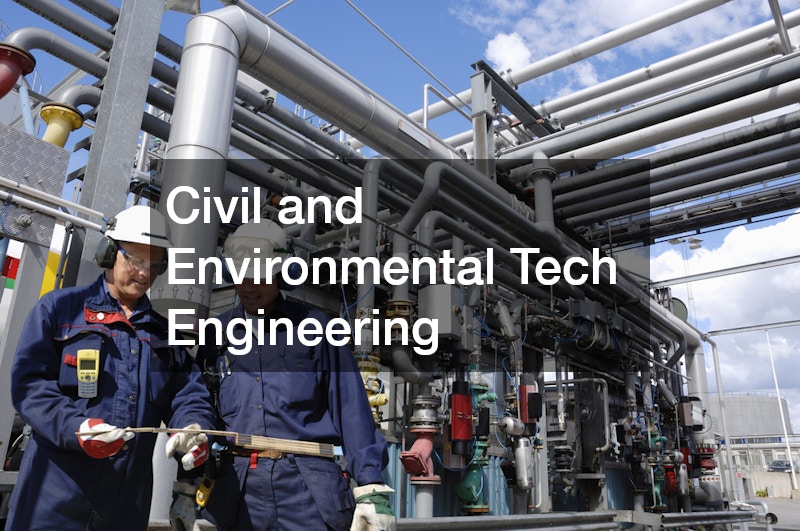
As our climate changes and our cities grow, the role of the engineer has become more data-driven than ever before. We are no longer just pouring concrete; we are building resilient systems that can withstand a century of environmental stress. This starts with the ground itself. The field of geo technical engineering now relies on 3D seismic modeling and satellite-based ground subsidence tracking. Before a new tech campus or a skyscraper is built, these engineers use AI to simulate how soil and rock will behave during an earthquake or a flood, ensuring that the foundations of our society are literally rock solid.
Building upon that foundation is the broader discipline of civil engineering. In 2026, this field is focused on “Smart City” infrastructure. This involves the design of roadways that can wirelessly charge moving electric vehicles, bridges embedded with fiber-optic sensors that report their own structural health, and transit systems that use real-time data to eliminate traffic jams. These engineers are the ultimate systems thinkers, balancing the needs of millions of citizens with the constraints of physics and the possibilities of modern sensor technology.
The Smart City Engineering Toolkit
BIM (Building Information Modeling):
Creating a complete “digital twin” of a structure before a single brick is laid.
Seismic Simulation:
Using supercomputers to stress-test building designs against various natural disaster scenarios.
Hydraulic Modeling:
Designing urban drainage systems that can handle “thousand-year” rain events using real-time sluice gate automation.
Remote Sensing:
Using LiDAR-equipped drones to create high-precision topographical maps of construction sites.
Sustainable Material Science:
Integrating carbon-sequestering concrete and self-healing asphalt into public works projects.
The Circular Economy and Resource Tech
One of the most significant tech booms of the mid-2020s has occurred in the management of our most basic resources: water and waste. The days of simple filtration are over. Today, municipal water wastewater systems are managed by highly sophisticated software that monitors chemical levels, detects leaks via acoustic sensors, and optimizes the energy used in desalination and purification. This is a high-stakes tech environment where a single sensor error can affect the health of an entire region. Professionals in this field must be comfortable with biological data, chemical engineering, and industrial control systems (SCADA).
On the other end of the lifecycle is the problem of “e-waste.” As we churn through smartphones, tablets, and AI servers, the industry has had to revolutionize electronic recycling. This isn’t just about smashing old laptops; it is a high-tech “urban mining” operation. Technicians in this field use robotic sorting and chemical electrolysis to recover rare earth metals like neodymium, gold, and lithium from retired circuit boards. As global supply chains for these materials become more volatile, the technology used to recover them from our trash has become a matter of national security and economic survival.
Resource Management Tech Trends
Membrane Bioreactors:
Using advanced filtration tech to turn wastewater back into high-quality drinking water in a closed-loop system.
Automated Sortation:
Using computer vision and AI to identify and separate different types of plastics and metals at high speeds.
Precious Metal Extraction:
Utilizing eco-friendly chemical baths to “strip” gold and silver from old motherboards without toxic runoff.
Real-Time Contaminant Tracking:
Using IoT sensors to provide a minute-by-minute map of water quality across a city’s pipe network.
Circular Supply Chain Tracking:
Using blockchain to verify that the materials in a new product were ethically sourced from recycled content.
Navigating the Tech Career Pivot
For those looking to enter these fields, the path to success in 2026 is paved with specialized certifications and a commitment to continuous learning. The traditional four-year degree is no longer the only entry point. Many professionals are now using “micro-credentials,” short, intensive programs that focus on a specific skill like robotic programming, infrared thermography, or cloud security. The most successful individuals are those who can bridge the gap between “hard” skills (like welding or electrical work) and “soft” skills (like data analysis and systems thinking).
If you are currently in a traditional trade, the best way to “tech up” is to seek out the digital tools used in your industry. For a plumber, that might mean learning to use robotic pipe-crawlers and acoustic leak detectors. For an office worker, it might mean learning the basics of Python or SQL to manage the data sets your company relies on. The “tech” isn’t a separate industry anymore; it is a layer that has been applied to every job in the world. By embracing that layer, you ensure your career remains resilient, profitable, and relevant in the decades to come.
Actionable Steps for Career Growth
Identify Your “Industry Plus”:
Take your current skill set and find the technology that is currently disrupting it.
Master the Software of Your Trade:
Whether it’s AutoCAD for engineers or a specialized CRM for solar sales, the software is the key to the high-wage tier.
Get Certified Early:
Being the first in your region with a new certification (like a Part 107 drone license for inspectors) gives you an immediate competitive edge.
Build a “Proof of Work” Portfolio:
In 2026, showing a video of a robot you programmed or a thermal audit you performed is more valuable than a static resume.
Network in the “Physical Tech” Space:
Attend trade shows for renewable energy or industrial automation to meet the people building the hardware of the future.
The top careers of 2026 are those that solve real-world problems using the most advanced tools available. Whether you are protecting the integrity of digital archives, ensuring a city has clean water through automated filtration, or literally building the foundations of a new tech hub, your value lies in your ability to master the intersection of the physical and the digital. The “tech dream” has moved out of the cubicle and into the field, the factory, and the infrastructure that keeps our world spinning.
As you look toward your next career move, don’t be afraid of the “dirty” side of tech. The most exciting innovations are happening in the places where we get our hands on the machinery of civilization. By choosing a path that combines technical mastery with physical utility, you are doing more than just securing a paycheck; you are becoming an essential architect of the modern world. The roadmap is clear, the tools are ready, and the future is waiting for those with the skills to build it. Focus on the skills that AI cannot replicate—creativity, physical dexterity, and complex problem-solving, and you will find yourself in high demand for the rest of your professional life.